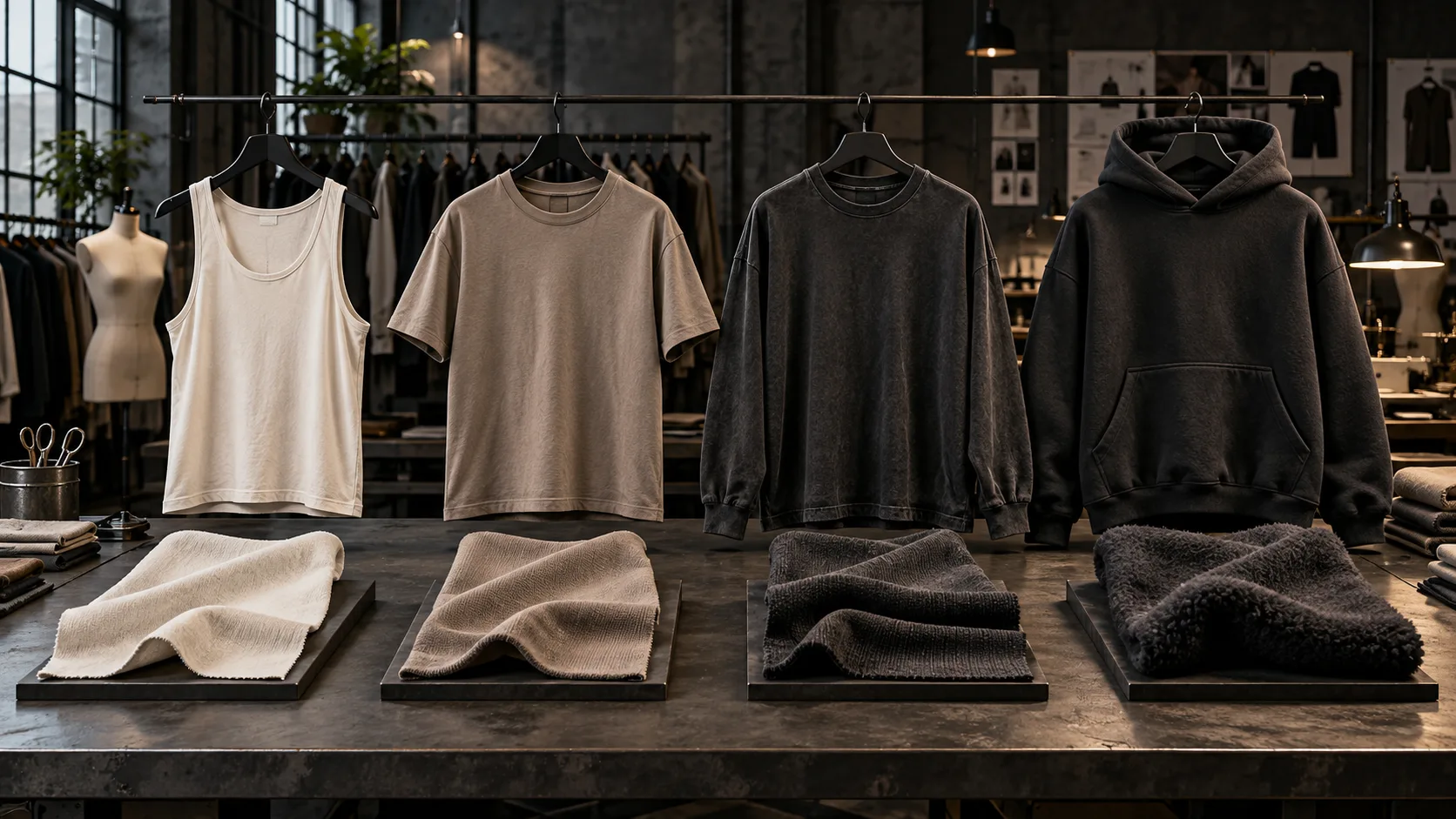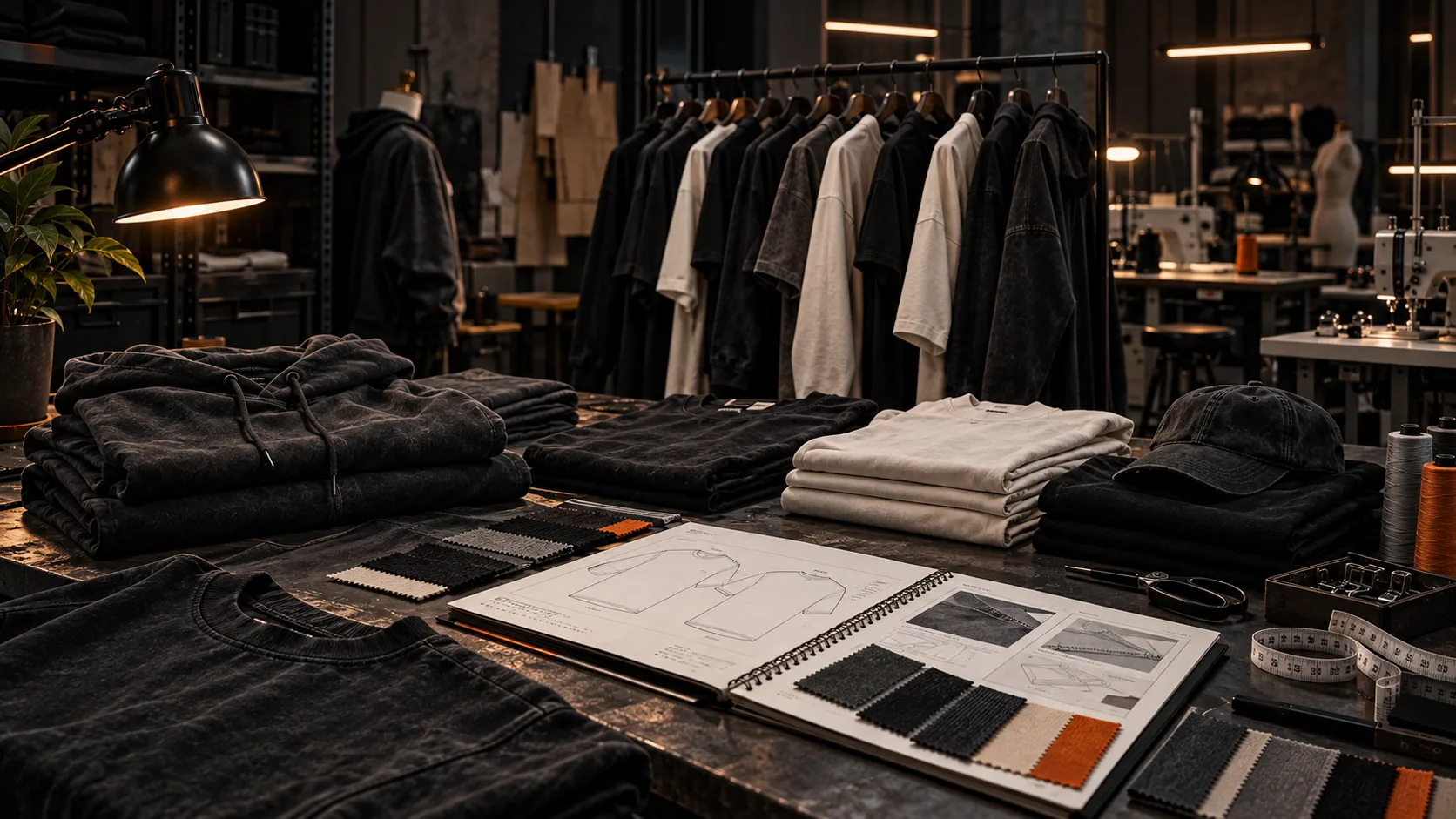
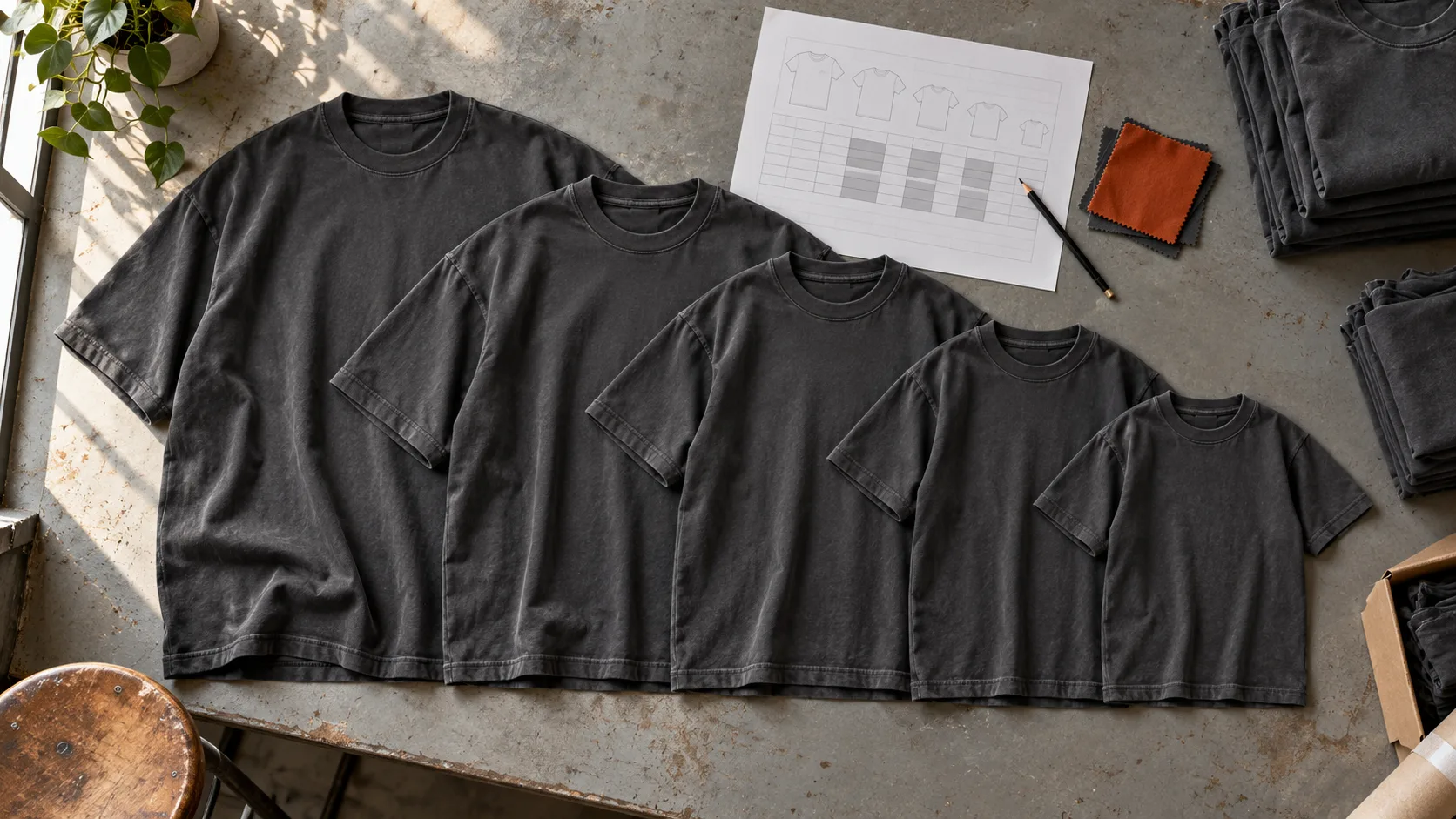
Choosing a total order quantity is only part of planning a streetwear collection. You also need to decide how those garments will be divided across sizes, colors, and designs.
An order can meet its overall sales target while still leaving the wrong inventory behind. One size may sell out early, while another remains available long after the launch. For a first collection, the challenge is making a useful decision with limited customer data.
There is no universal size ratio that fits every brand. A practical allocation starts with your garment measurements, intended audience, and available evidence, then accounts for manufacturing requirements.
1. Start with the Approved Garment Measurements
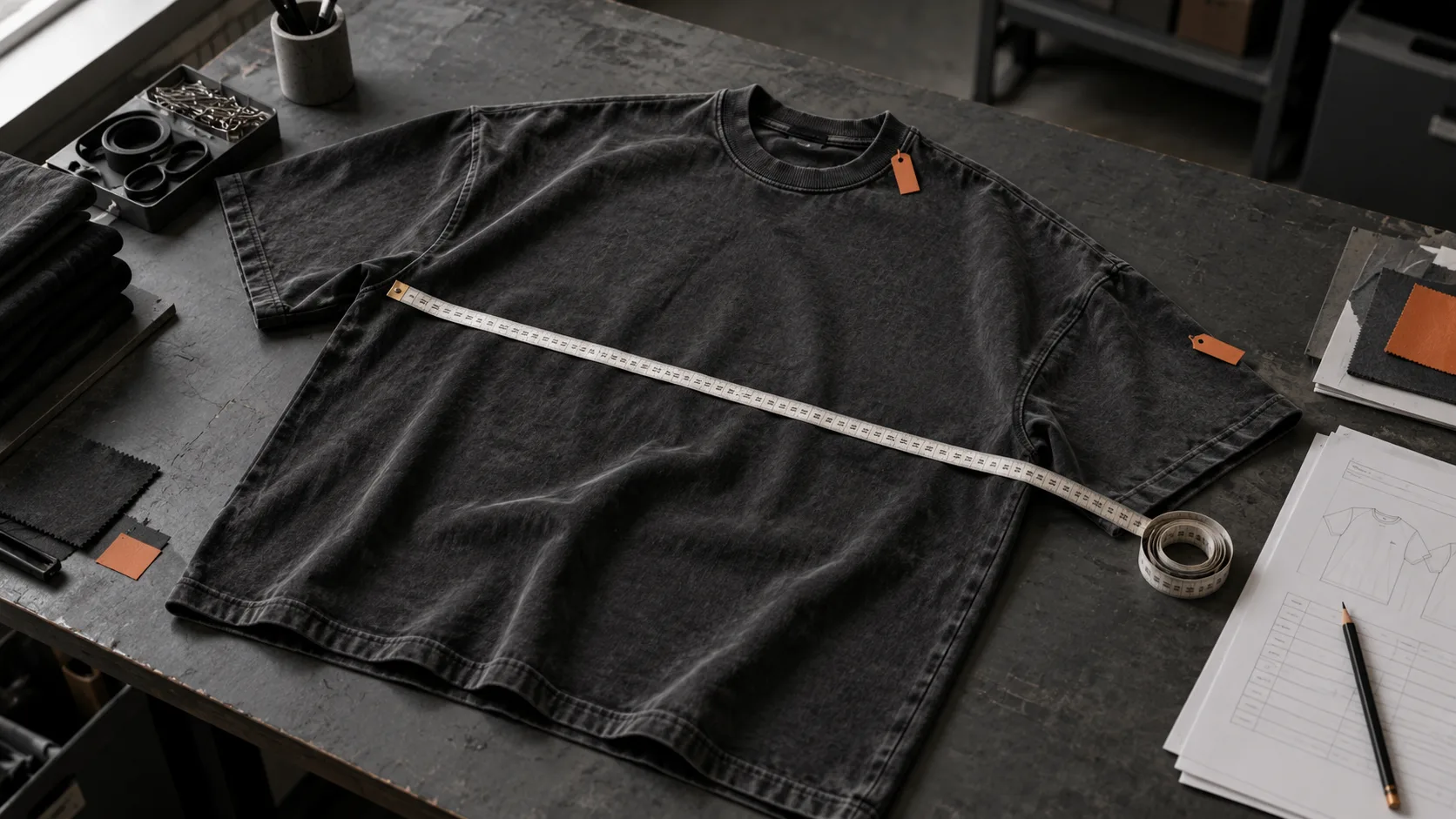
Size labels alone do not explain how a garment fits. A medium oversized T-shirt and a medium regular-fit T-shirt can have very different dimensions.
Before estimating quantities, confirm the measurement chart for your actual product. Review body width, body length, shoulder width, and sleeve dimensions. For hoodies, include relevant details such as hem and cuff measurements.
If your brand uses a shorter, wider silhouette, customers may select sizes differently from those buying a longer, narrower garment. Your size allocation should therefore relate to the approved product rather than a generic chart found online.
Also confirm whether the measurements describe the garment before or after the intended washing and finishing process. Use a consistent reference when discussing sizing with customers and your manufacturer.
2. Gather Evidence from the Customers You Intend to Reach
Established brands can review previous orders. New brands may need to combine several smaller sources of information.
Useful inputs include:
- Size selections from genuine preorders.
- Previous sales of a comparable product.
- Customer responses after viewing the actual measurement chart.
- Fit-session feedback from people within the intended audience.
- Size requests collected through a launch waiting list.
Treat each source according to its limitations. A social media poll records stated preferences, not confirmed purchases. A previous fitted T-shirt launch may not predict demand for a new oversized hoodie.
Keep the evidence attached to its context. Record which product, fit, audience, and sales channel produced the information. This makes it easier to judge whether it applies to the collection you are developing.
3. Build a Working Size Breakdown
Convert your best available demand estimate into a proposed quantity for each size.
For illustration only, suppose a brand plans 100 units in one color and estimates the following distribution:
| Size | Illustrative share | Units |
|---|---|---|
| S | 10% | 10 |
| M | 25% | 25 |
| L | 30% | 30 |
| XL | 25% | 25 |
| XXL | 10% | 10 |
| Total | 100% | 100 |
| This is a calculation example, not a recommended streetwear size ratio or a GRAPHFORGE ordering requirement. |
For other totals, multiplying each estimated share by the planned quantity may produce fractions. Round to whole units, then reconcile the final numbers so they equal the intended order total. Document any adjustment rather than leaving the manufacturer to interpret it.
4. Check the Allocation for Each Color
A collection-level ratio can hide differences between colors or designs.
If your launch includes black and off-white versions, decide whether the same size distribution is appropriate for both. Use color-specific preorder or sales evidence where available. If you have no evidence of a difference, applying one clearly documented assumption may be more practical than inventing separate ratios.
Calculate quantities at the level that will actually be ordered: style, color, and size.
For example, “200 T-shirts” is incomplete if the factory needs to know how many black large garments and off-white medium garments to produce. Make each combination visible in the order matrix.
5. Confirm Supplier Constraints Before Finalizing
Ask how the proposed breakdown interacts with production requirements.
Questions to clarify include:
- Does the minimum quantity apply per style, color, or another grouping?
- Is there a minimum quantity for an individual size?
- Does an extended size range affect pattern development or pricing?
- Must packaging quantities follow particular multiples?
- How will any agreed overproduction or underproduction be handled?
Do not assume that meeting an overall minimum automatically makes every size-and-color combination feasible.
If the proposed allocation is difficult to manufacture, ask for an explanation and alternatives. You may need to simplify the launch, reduce color choices, or revise quantities. Confirm the agreed solution in writing before approving production.
6. Keep the First Order Focused
Adding sizes and colors creates more inventory combinations to manage. A modest total quantity spread across many combinations can leave very few units available in each one.
Review whether every planned option serves a clear customer need. Removing a weak color option may give you more room to support the sizes your audience actually requests.
At the same time, do not remove sizes simply to make the spreadsheet easier. Consider your intended audience and explain the available size range clearly. The goal is a deliberate assortment supported by evidence and feasible production quantities.
7. Prepare One Final Production Matrix
Use a single approved document containing:
- Style name and reference code.
- Color name or approved color reference.
- Size labels matching the measurement chart.
- Quantity for every size-and-color combination.
- Subtotals by color and totals by style.
- Revision date and approval status.
Check that labels, packaging instructions, and order documents use the same size names. Ask the manufacturer to acknowledge the latest version, especially if quantities changed during sampling.
A final matrix should make the intended order understandable without relying on scattered messages or an older spreadsheet.
8. Learn from Availability as Well as Sales
After launch, record sales by size, but also track when individual sizes became unavailable.
If large sells out during the first week, its final sales total does not capture the demand you could no longer fulfill. Conversely, a size that sells slowly may have had limited visibility or availability in a popular color.
Combine sales records with stockout dates, return reasons, fit comments, and repeat size requests. Use that evidence to revise the next order rather than automatically repeating the first allocation.
Discuss Your Size Breakdown with GRAPHFORGE
When preparing a custom streetwear inquiry, share your measurement chart, planned style and color quantities, and proposed size breakdown with GRAPHFORGE.
Identify which figures are confirmed and which remain estimates. A clear production matrix gives both sides a practical starting point for reviewing feasibility, sampling requirements, and the details that need agreement before production.
Ready to start your production run?
Send us your design, quantity and target delivery date. We will reply with a clear quote and a sample timeline within 48 hours.