Streetwear Fabric GSM Guide: How to Choose the Right Weight for T-Shirts and Hoodies
Fabric weight is one of the most important decisions when developing a streetwear collection.
A T-shirt made from 180 GSM fabric can feel completely different from one made from 260 GSM cotton, even if the two garments use the same pattern and measurements.
The same applies to hoodies, long sleeve T-shirts and tank tops.
For clothing brands, understanding fabric GSM makes it easier to communicate with manufacturers, choose the right materials and create garments that match the intended fit, season and market positioning.
In this guide, we explain what GSM means, how different fabric weights affect apparel, and how to choose suitable GSM ranges for custom streetwear production.
What Does GSM Mean in Clothing?
GSM stands for grams per square meter.
It is a measurement used to describe the weight of a fabric.
In simple terms:
The higher the GSM, the heavier the fabric generally feels.
For example:
- 160 GSM = lightweight
- 200 GSM = midweight
- 260 GSM = heavyweight
- 320 GSM = suitable for heavier sweatshirts and hoodies
However, GSM should not be used as the only measure of fabric quality.
A high GSM fabric is not automatically better than a lower GSM fabric.
The final performance also depends on:
- Fiber quality
- Cotton type
- Yarn
- Knitting structure
- Fabric density
- Finishing
- Washing
- Shrinkage
- Surface texture
The correct GSM depends on the product you are trying to develop.
Why GSM Matters for Streetwear
Streetwear often relies heavily on silhouette and fabric structure.
An oversized garment needs enough structure to maintain its intended shape.
If the fabric is too light, a boxy or oversized T-shirt may collapse against the body instead of holding its silhouette.
If the fabric is too heavy, however, the product may become uncomfortable for the season or market.
Choosing the right GSM affects:
- Drape
- Structure
- Comfort
- Breathability
- Durability
- Print performance
- Wash effect
- Perceived quality
This is why fabric weight should be considered early in the product development process.
160–180 GSM: Lightweight Streetwear
Fabric in the 160–180 GSM range is generally considered lightweight.
It is suitable for products designed for warmer weather and lighter layering.
Common applications include:
- Tank tops
- Lightweight T-shirts
- Summer collections
- Promotional apparel
- Lightweight layering pieces
Advantages
Lightweight fabrics usually offer:
- Better breathability
- Softer drape
- Lower garment weight
- Comfortable summer wear
- Easy layering
Best For
This GSM range is especially useful for:
Tank Tops
A summer tank top does not usually require the same heavy structure as a premium oversized T-shirt.
Summer T-Shirts
Brands targeting hot climates may prefer lighter fabrics.
Things to Consider
Very lightweight fabrics may show more body shape and may not hold oversized silhouettes as strongly as heavier materials.
For premium streetwear, fabric construction and opacity should be checked carefully during sampling.
200–220 GSM: Midweight and Versatile
The 200–220 GSM range is one of the most versatile options for T-shirts.
It provides more structure than lightweight fabric while still remaining comfortable for everyday wear.
Common applications include:
- Graphic T-shirts
- Standard streetwear T-shirts
- Relaxed-fit T-shirts
- Long sleeve T-shirts
- Layering garments
Advantages
This weight range can provide:
- Balanced structure
- Comfortable hand feel
- Good print surface
- Better durability
- Year-round versatility
For many brands, this range works well as a starting point when developing a standard custom T-shirt.
Best For
Custom Graphic T-Shirts
Screen printing, DTF and other graphic applications can work well on properly selected midweight cotton.
Long Sleeve T-Shirts
A 200–220 GSM long sleeve can provide enough structure without feeling too heavy.
240–260 GSM: Heavyweight Streetwear T-Shirts
The 240–260 GSM range is particularly relevant for premium and heavyweight streetwear.
This weight can create a more structured silhouette and stronger visual presence.
Common applications include:
- Heavyweight T-shirts
- Oversized T-shirts
- Boxy T-shirts
- Premium streetwear
- Acid wash T-shirts
- Garment-dyed T-shirts
Why Streetwear Brands Use Heavyweight Fabric
Heavyweight fabrics can help an oversized garment maintain:
- Wider body shape
- Strong shoulder line
- Wide sleeves
- Boxy silhouette
- Structured drape
This makes them suitable for modern streetwear fits.
Best For
Oversized T-Shirts
A heavier cotton fabric can support drop shoulders and wider proportions.
Acid Wash Streetwear T-Shirts
Heavyweight cotton can work well with vintage-inspired washes when the fabric and finishing process are properly developed.
Premium Blank T-Shirts
Brands looking for a more substantial hand feel may prefer this weight range.
280–320 GSM: Sweatshirts and Lighter Hoodies
Once fabric weight moves into the 280–320 GSM range, it becomes suitable for many sweatshirts and hoodies.
Typical fabrics may include:
- French terry
- Fleece
- Cotton blends
- Heavy jersey
Common products include:
- Hoodies
- Crewneck sweatshirts
- Oversized sweatshirts
- Transitional outerwear
- Premium layering pieces
280 GSM
This can work well for lighter hoodies and sweatshirts.
It is useful for brands that want a hoodie with moderate weight without creating a very heavy winter garment.
300–320 GSM
This range provides more structure and warmth.
It is commonly suitable for:
- Oversized hoodies
- Streetwear sweatshirts
- Premium fleece garments
The actual result depends heavily on whether the fabric is brushed fleece, French terry or another knit construction.
350–450 GSM: Premium Heavyweight Hoodies
Some streetwear brands prefer hoodies that feel extremely substantial.
For this reason, premium heavyweight hoodies may use fabrics around:
350–450 GSM or higher
These fabrics can produce a strong, structured silhouette.
They are suitable for:
- Premium heavyweight hoodies
- Winter collections
- Oversized hoodies
- High-end streetwear
- Structured sweatshirts
However, heavier is not always better.
Extremely heavy fabric can:
- Increase cost
- Increase shipping weight
- Reduce breathability
- Require stronger sewing construction
- Feel too warm in certain markets
The right weight should match the intended customer and season.
GSM Recommendations by Product Type
Below is a useful starting reference.
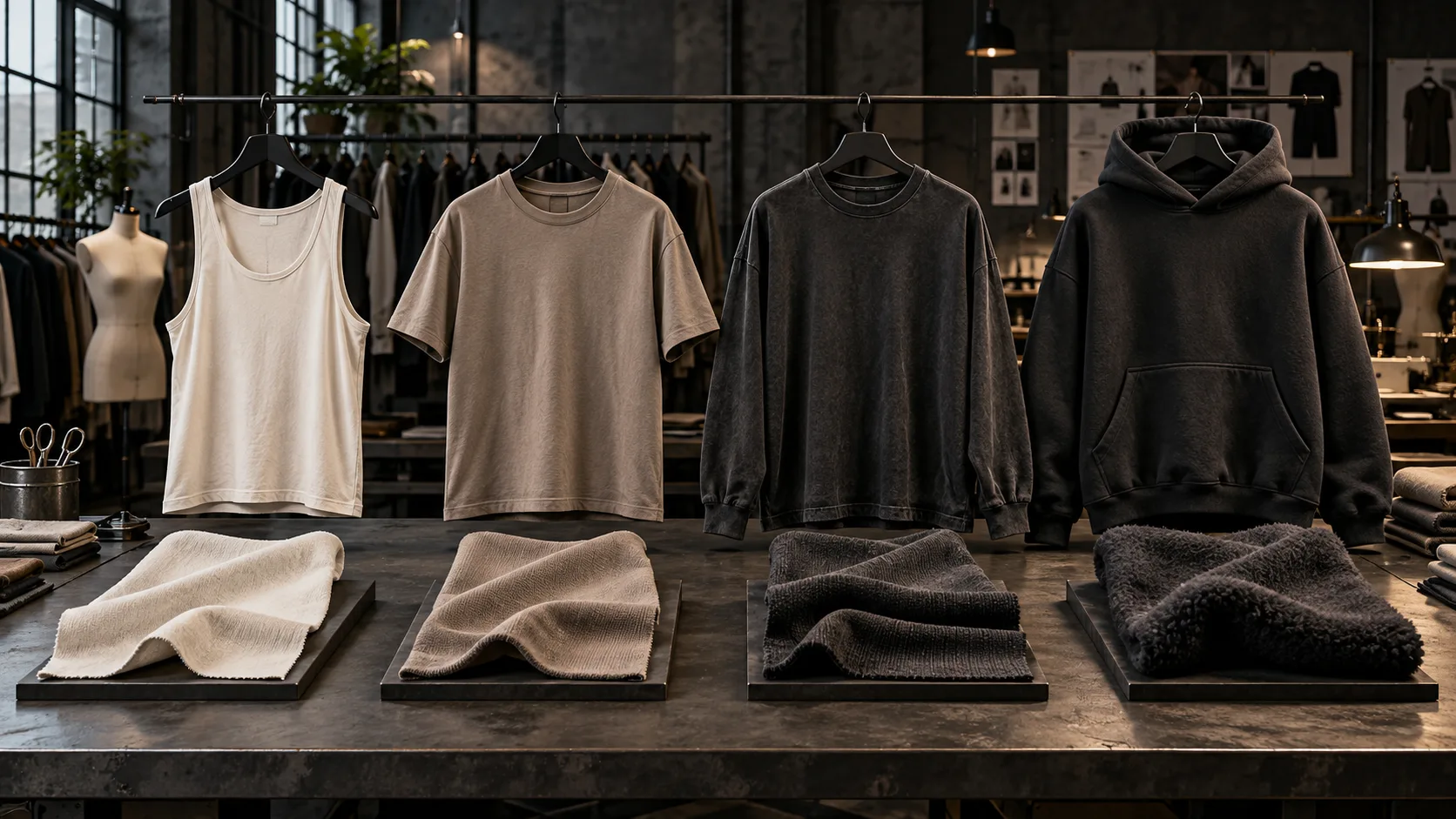
Tank Tops
Recommended range:
160–240 GSM
Lightweight tank tops can work well for summer collections, while heavyweight muscle tanks can use higher GSM fabrics for a more structured streetwear look.
T-Shirts
Recommended range:
180–280 GSM
For everyday T-shirts:
200–220 GSM
For premium oversized streetwear:
240–260 GSM
For heavier specialty styles, brands may choose even higher weights.
Long Sleeve T-Shirts
Recommended range:
200–280 GSM
A midweight fabric provides comfortable layering, while a heavier fabric creates a more substantial streetwear silhouette.
Garment dye and washed finishes can also change the final feel.
Hoodies & Sweatshirts
Recommended range:
280–450 GSM
Lighter hoodies can start around 280–320 GSM.
Premium heavyweight streetwear hoodies may use:
350–450 GSM
The right choice depends on season, fabric structure and target positioning.
Does Higher GSM Mean Better Quality?
No.
This is one of the most common misunderstandings in clothing manufacturing.
Higher GSM simply means more fabric weight per square meter.
Quality also depends on:
- Fiber quality
- Yarn consistency
- Knitting quality
- Fabric finishing
- Color fastness
- Shrinkage control
- Sewing
- Construction
- Washing
For example, a well-made 220 GSM cotton fabric can perform better than a poorly produced 300 GSM fabric.
Brands should evaluate fabric samples rather than selecting materials based only on GSM numbers.
GSM and Oversized Fit
Fabric weight becomes particularly important when developing oversized clothing.
A successful oversized silhouette usually depends on the relationship between:
Fabric + Pattern + Measurements
Heavyweight fabric alone does not automatically create a good oversized T-shirt.
Important pattern details include:
- Shoulder width
- Chest width
- Sleeve opening
- Sleeve length
- Body length
- Neck opening
- Hem width
For example, a 260 GSM fabric combined with dropped shoulders, wide sleeves and a shorter body can create a strong boxy silhouette.
The same fabric used with a narrow traditional pattern will produce a very different result.
GSM and Printing
Fabric weight can also affect printing.
For streetwear graphics, manufacturers may use:
- Screen printing
- Puff printing
- DTF
- DTG
- Embroidery
Heavier fabrics often provide a stable surface for large streetwear graphics.
However, the print method should be selected according to:
- Fabric composition
- Surface texture
- Artwork
- Colors
- Quantity
- Desired finish
A manufacturer should test the print method when necessary before bulk production.
GSM and Garment Washing
Garment washing can change:
- Hand feel
- Color
- Texture
- Shrinkage
- Surface appearance
Common streetwear finishes include:
- Acid wash
- Garment dye
- Enzyme wash
- Stone wash
- Vintage wash
For heavyweight streetwear products, these techniques can create strong visual character.
For example, a 240–260 GSM oversized T-shirt combined with garment dye or acid wash can produce a substantial vintage-inspired result.
How to Choose the Right GSM for Your Brand
Before choosing fabric weight, consider the following questions.
1. What Product Are You Making?
A tank top and a hoodie should not use the same fabric specification.
2. What Season Is the Product For?
Summer products generally require lighter materials.
Winter collections can support heavier fabrics.
3. What Fit Do You Want?
Oversized and boxy products often benefit from fabrics with more structure.
4. What Market Are You Selling To?
Climate and customer preference matter.
A 400 GSM hoodie may work well in colder markets but may be unnecessarily heavy for warm climates.
5. What Is Your Target Price?
Heavier fabrics generally use more material and can increase product and shipping costs.
6. What Finish Do You Want?
Acid wash, garment dye and other finishing processes may influence the fabric choice.
Always Request Fabric Samples
Before confirming bulk production, brands should request fabric swatches or samples whenever possible.
A fabric sample allows you to evaluate:
- Thickness
- Texture
- Stretch
- Color
- Drape
- Surface
- Hand feel
After that, garment sampling allows you to evaluate how the fabric performs in the actual pattern.
This is particularly important for custom streetwear.
Custom GSM Development at GRAPHFORGE
GRAPHFORGE works with streetwear brands and private label buyers to develop products across different fabric weights.
Our core categories include:
- T-Shirts
- Hoodies & Sweatshirts
- Long Sleeve T-Shirts
- Tank Tops
Depending on the product and project requirements, customization can include:
- Fabric selection
- Custom GSM
- Oversized fit
- Boxy fit
- Custom colors
- Garment dye
- Acid wash
- Screen printing
- Puff printing
- DTF printing
- Embroidery
- Labels
- Packaging
Rather than selecting fabric weight in isolation, we recommend considering GSM together with fit, finishing and intended use.
Conclusion
Choosing the right fabric GSM for streetwear is about finding the correct balance between weight, structure, comfort and design.
As a general starting point:
- 160–180 GSM: lightweight summer apparel
- 200–220 GSM: versatile everyday T-shirts
- 240–260 GSM: premium heavyweight streetwear T-shirts
- 280–320 GSM: hoodies and sweatshirts
- 350–450 GSM: premium heavyweight hoodies
These ranges are guidelines rather than fixed rules.
The final fabric should always be evaluated together with garment fit, construction, washing and printing.
A strong streetwear product comes from combining the right material with the right silhouette and production process.
Need Help Choosing Fabric for Your Collection?
Send us your:
- Product reference
- Target GSM
- Fit requirements
- Quantity
- Artwork
- Color direction
- Wash requirements
We can help evaluate the appropriate fabric and develop your product from sampling to bulk production.
GET A QUOTE →
Ready to start your production run?
Send us your design, quantity and target delivery date. We will reply with a clear quote and a sample timeline within 48 hours.