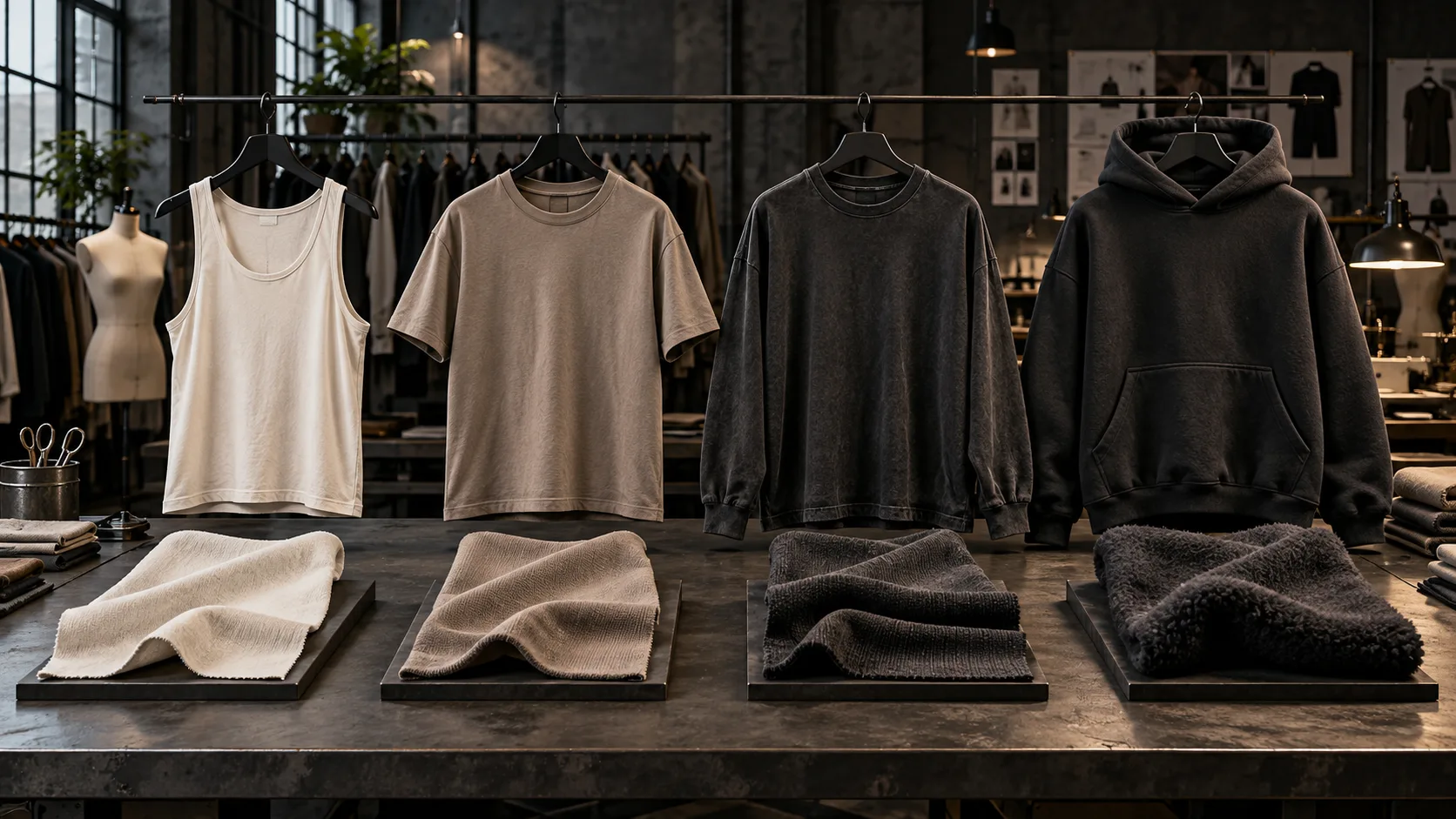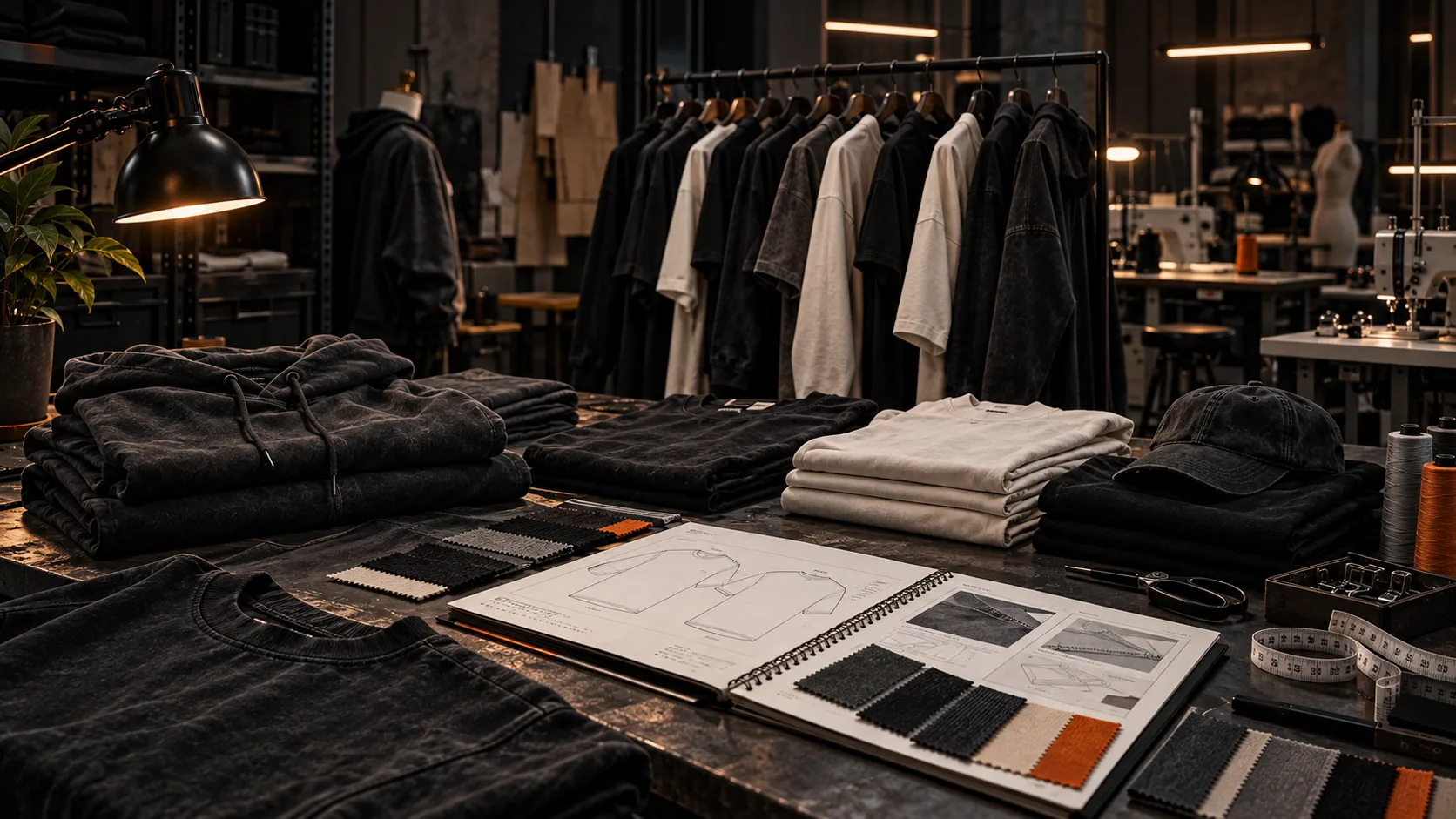
Launching a clothing brand involves much more than placing a logo on a blank garment. Fabric, fit, construction, printing, labels, packaging, sampling, and production all influence how customers perceive your brand.
This is where working with a reliable private label clothing manufacturer becomes important.
A private label manufacturer can help transform your ideas into finished garments carrying your own branding. For streetwear brands, fashion startups, creators, retailers, and established apparel companies, private label production provides a way to develop products that look and feel different from generic wholesale clothing.
In this guide, we explain how private label clothing manufacturing works, what services to expect, how customization is handled, and what brands should prepare before beginning production.
What Is a Private Label Clothing Manufacturer?
A private label clothing manufacturer produces apparel that is sold under another company's brand name.
Instead of selling the manufacturer's own brand, the factory produces garments according to the buyer's specifications and applies custom branding such as:
- Neck labels
- Woven labels
- Care labels
- Size labels
- Hang tags
- Custom packaging
- Printed logos
- Embroidery
- Brand-specific colors
Private label production can range from relatively simple branding changes to completely custom apparel development.
For example, one brand may choose an existing oversized T-shirt silhouette and add its own print and labels.
Another brand may request:
- Custom fabric
- 260 GSM cotton
- Oversized fit
- Drop shoulders
- Acid wash
- Large back screen print
- Custom neck label
- Branded packaging
Both can fall under private label manufacturing, but the level of customization is very different.
Private Label vs. Wholesale Clothing
Private label clothing and wholesale clothing are not the same.
With traditional wholesale clothing, buyers usually purchase finished products that already exist.
Customization may be limited.
Private label manufacturing provides much more control over the final product.
Brands may be able to choose:
- Fabric
- GSM
- Fit
- Color
- Construction
- Printing
- Embroidery
- Wash effect
- Labels
- Packaging
This allows a clothing brand to create a more recognizable product identity.
For streetwear brands in particular, these details are important because customers often pay attention to silhouette, fabric weight, finishing, and graphic placement.
Why Brands Choose Private Label Manufacturing
Working with a private label clothing manufacturer gives brands several advantages.
More Control Over the Product
Instead of choosing only from existing products, brands can develop garments according to their own direction.
This can include changing:
- Body length
- Shoulder width
- Sleeve width
- Fabric weight
- Color
- Wash
- Print placement
Stronger Brand Identity
Custom labels, tags, packaging, colors, and fits help create a consistent brand experience.
Customers are more likely to remember a garment that has recognizable details.
Better Product Differentiation
If multiple brands sell identical blank garments, competition often becomes focused on graphics or price.
Custom manufacturing allows you to differentiate through the garment itself.
Easier Collection Development
A good manufacturer can help brands develop multiple products around one visual direction.
For example:
- T-Shirts
- Hoodies
- Long Sleeve T-Shirts
- Tank Tops
These products can share similar fabric colors, washes, labels, and fit concepts.
What Can Be Customized?
Customization depends on the factory, product, quantity, and production method.
A capable private label manufacturer may support the following areas.
1. Fabric
Fabric is one of the first decisions in apparel development.
Common streetwear fabric options include:
- 100% cotton
- Cotton-polyester blends
- Jersey
- French terry
- Fleece
- Rib fabric
- Specialty knitted fabrics
The right fabric depends on the type of garment being developed.
A lightweight summer tank top requires a very different fabric structure from a heavyweight hoodie.
2. Fabric Weight
Fabric weight is commonly measured in GSM.
GSM stands for grams per square meter.
Examples include:
160–180 GSM
Lightweight products and summer garments.
200–220 GSM
Versatile everyday T-shirts.
240–260 GSM
Heavyweight and structured streetwear T-shirts.
280–320 GSM+
Sweatshirts, hoodies, and heavier garments.
Higher GSM does not automatically mean better quality.
The final result also depends on fiber quality, knitting, finishing, shrinkage, and construction.
3. Fit and Silhouette
Fit is especially important for modern streetwear brands.
Common fits include:
- Regular fit
- Relaxed fit
- Oversized fit
- Boxy fit
- Cropped fit
- Drop shoulder
- Wide sleeve
A private label clothing manufacturer should be able to adjust garment measurements based on your specifications.
For example, a brand may request:
- Wider shoulders
- Shorter body length
- Larger sleeves
- Higher neckline
- Wider hem
These details help create a unique silhouette.
4. Custom Colors
Brands can often choose from existing fabric colors or develop custom colors.
Depending on the production method, color customization may include:
- Solid colors
- Pantone matching
- Garment dye
- Vintage colors
- Washed colors
For streetwear collections, colors such as washed black, charcoal, olive, vintage brown, off-white, and faded grey are commonly used.
5. Printing
Graphic printing is one of the most important customization options for many brands.
Common techniques include:
Screen Printing
Suitable for many streetwear graphics and bulk production.
Puff Printing
Creates raised print details and additional texture.
DTF Printing
Useful for detailed artwork and flexible color applications.
DTG Printing
Suitable for complex full-color artwork depending on fabric and order requirements.
A manufacturer should recommend a printing technique based on your artwork and target result.
6. Embroidery
Embroidery can add a premium feel to clothing.
It can be applied to:
- Chest
- Sleeves
- Hood
- Back
- Labels
- Small logos
Embroidery is particularly useful for simple logos and branding details.
7. Garment Washing and Finishing
Finishing can dramatically change the final look of a garment.
Common options include:
- Acid wash
- Garment dye
- Enzyme wash
- Stone wash
- Vintage wash
- Distressed finishing
These techniques are particularly relevant for streetwear and vintage-inspired collections.
An acid wash T-shirt, for example, creates visible tonal variation and gives the product a more worn-in appearance.
8. Private Labels
Labels are a major part of private label production.
Options may include:
- Printed neck labels
- Woven neck labels
- Care labels
- Size labels
- Side seam labels
- Hem labels
These small details help make the product feel like a finished branded garment instead of a generic blank product.
9. Hang Tags
Hang tags are another important branding element.
A custom hang tag may include:
- Brand logo
- Product information
- Size
- Barcode
- Website
- Social media
- Brand story
The paper quality, shape, printing, and attachment method can all be customized.
10. Packaging
Custom packaging can improve the presentation of your finished product.
Options may include:
- Custom polybags
- Printed bags
- Branded stickers
- Tissue paper
- Custom boxes
- Cartons
For wholesale and B2B orders, packaging also needs to protect products during transportation.
How Does Private Label Clothing Production Work?
Although the exact process varies by manufacturer, most projects follow a similar structure.
Step 1: Product Idea
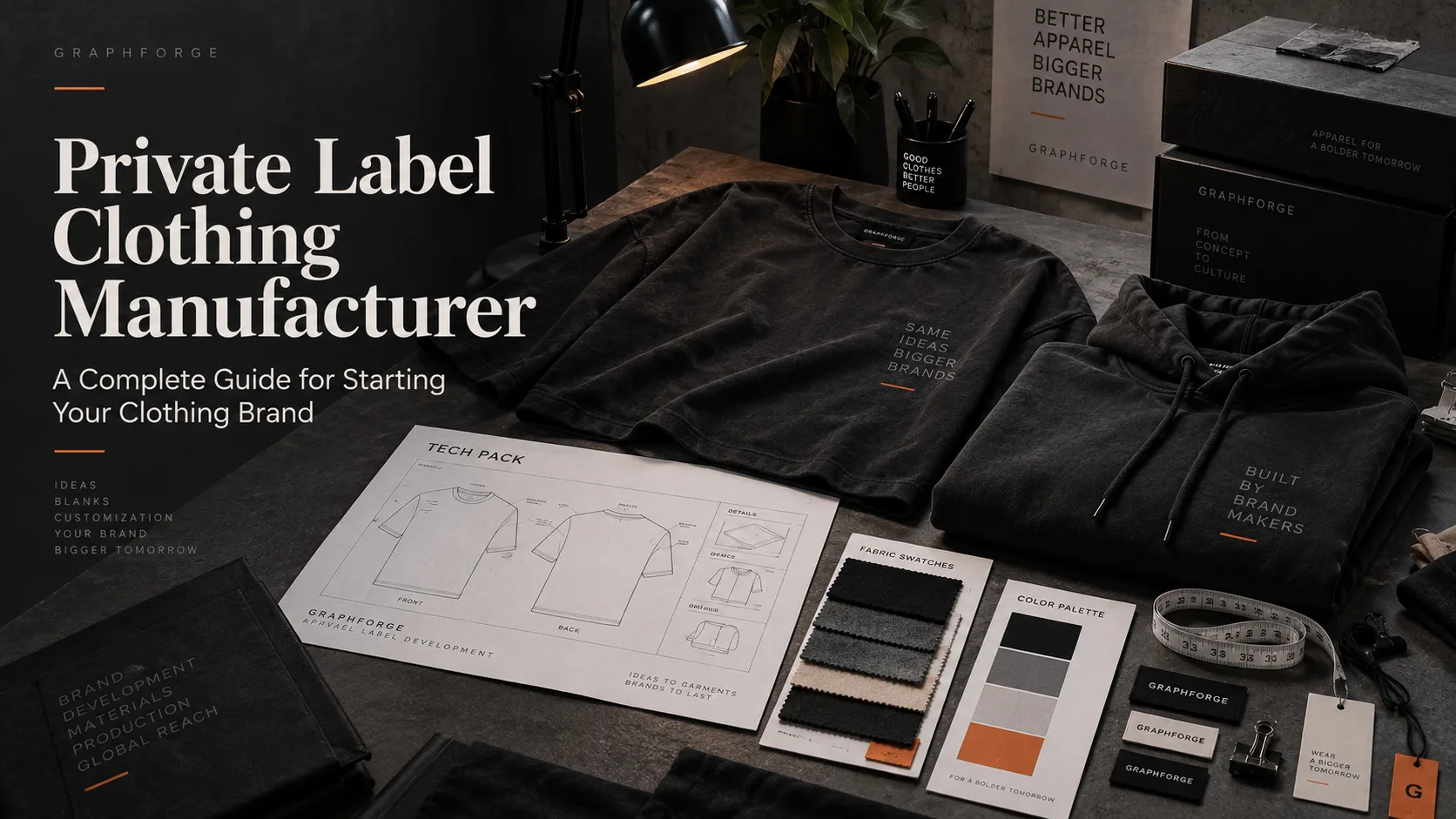
The brand provides references, sketches, photos, artwork, or a tech pack.
Important information may include:
- Product type
- Fabric
- GSM
- Color
- Fit
- Quantity
- Printing
- Labels
Step 2: Specification Confirmation
The factory reviews the requirements and confirms which details can be produced.
Step 3: Sampling
A sample is developed before bulk production.
This helps confirm:
- Fit
- Fabric
- Color
- Printing
- Construction
- Labels
- Wash effect
Step 4: Sample Revision
If necessary, changes are made.
For example:
- Increase body width
- Shorten garment length
- Change print size
- Adjust color
- Change fabric weight
Step 5: Sample Approval
Once the sample is approved, the final specifications are confirmed.
Step 6: Bulk Production
Fabric preparation, cutting, sewing, printing, washing, labeling, and finishing are completed according to the approved specifications.
Step 7: Quality Control
The manufacturer checks finished products before packaging.
Step 8: Packaging and Delivery
Products are packed according to the agreed requirements and prepared for shipment.
What Is the MOQ for Private Label Clothing?
MOQ means minimum order quantity.
There is no universal MOQ for private label clothing.
It may depend on:
- Product
- Fabric
- Color
- Printing
- Dyeing
- Washing
- Labels
- Packaging
Some manufacturers may offer lower MOQs for simple designs but require higher quantities for custom dyeing or special fabric development.
For smaller streetwear brands, relatively low MOQ production can make it easier to test new products.
For certain projects, an MOQ of around 50 pieces may be possible.
However, custom fabrics, custom dyeing, and highly specialized processes may require higher quantities.
Always confirm the MOQ before beginning sample development.
What Should You Prepare Before Contacting a Manufacturer?
The more information you provide, the easier it is for the manufacturer to understand your project.
Try to prepare:
- Product reference
- Artwork
- Target quantity
- Target GSM
- Preferred fabric
- Fit reference
- Color
- Printing method
- Logo
- Label requirements
- Packaging requirements
- Target delivery date
You do not necessarily need a complete technical package.
A good manufacturer may help develop the specifications.
However, providing clear references reduces misunderstanding.
Questions to Ask a Private Label Clothing Manufacturer
Before working with a new supplier, ask questions such as:
- What types of clothing do you specialize in?
- What is your MOQ?
- Can you customize fabric?
- Can you customize GSM?
- Do you support oversized fits?
- Can you develop custom patterns?
- What printing methods do you offer?
- Do you provide embroidery?
- Can you do acid wash?
- Can you do garment dye?
- Can you produce custom neck labels?
- Can you make woven labels?
- Can you produce custom packaging?
- Can I order a sample?
- How long does sampling take?
- How long does bulk production take?
- How do you control product quality?
A manufacturer should be able to clearly explain its production capabilities.
Choosing a Private Label Manufacturer for Streetwear
Streetwear production has its own requirements.
When selecting a private label clothing manufacturer for streetwear, pay particular attention to:
Fabric Weight
Streetwear often uses heavier fabrics than traditional promotional clothing.
Fit
Oversized, boxy, drop shoulder, and wide sleeve fits need to be developed correctly.
Printing
Large front, back, and sleeve graphics are common.
Washing
Vintage and washed effects can be an important part of the design.
Construction
Collars, cuffs, hems, stitching, and garment proportions affect the overall feel of the product.
A manufacturer that already understands streetwear can make the development process more efficient.
Private Label Streetwear Manufacturing at GRAPHFORGE
GRAPHFORGE works with streetwear brands, private labels, teams, creators, and apparel buyers to develop custom clothing.
Our core product categories include:
- T-Shirts
- Hoodies & Sweatshirts
- Long Sleeve T-Shirts
- Tank Tops
Available customization can include:
- Custom GSM
- Oversized fit
- Boxy fit
- Custom colors
- Acid wash
- Garment dye
- Screen printing
- Puff printing
- DTF printing
- Embroidery
- Neck labels
- Woven labels
- Hang tags
- Branded packaging
Our goal is to support brands from initial product development through sampling and bulk production.
Conclusion
Working with the right private label clothing manufacturer gives your brand more control over fabric, fit, color, graphics, labels, packaging, and overall product quality.
Instead of simply adding a logo to an existing garment, private label production allows you to build products around your own brand identity.
Before choosing a manufacturer, evaluate their:
- Product specialization
- Fabric options
- Fit development
- Printing capability
- Washing capability
- MOQ
- Sampling process
- Quality control
- Communication
- Production capacity
The right manufacturing partner should help you turn an idea into a product that can be consistently produced as your brand grows.
Ready to Build Your Private Label Collection?
Developing a new T-shirt, hoodie, long sleeve, or tank top collection?
Send us your:
- Product reference
- Artwork
- Quantity
- Fabric requirements
- GSM
- Fit requirements
- Branding details
We can review your project and help develop it from sample to bulk production.
GET A QUOTE →
Ready to start your production run?
Send us your design, quantity and target delivery date. We will reply with a clear quote and a sample timeline within 48 hours.